Solar Lights for Shady Areas: What Works and What Does Not
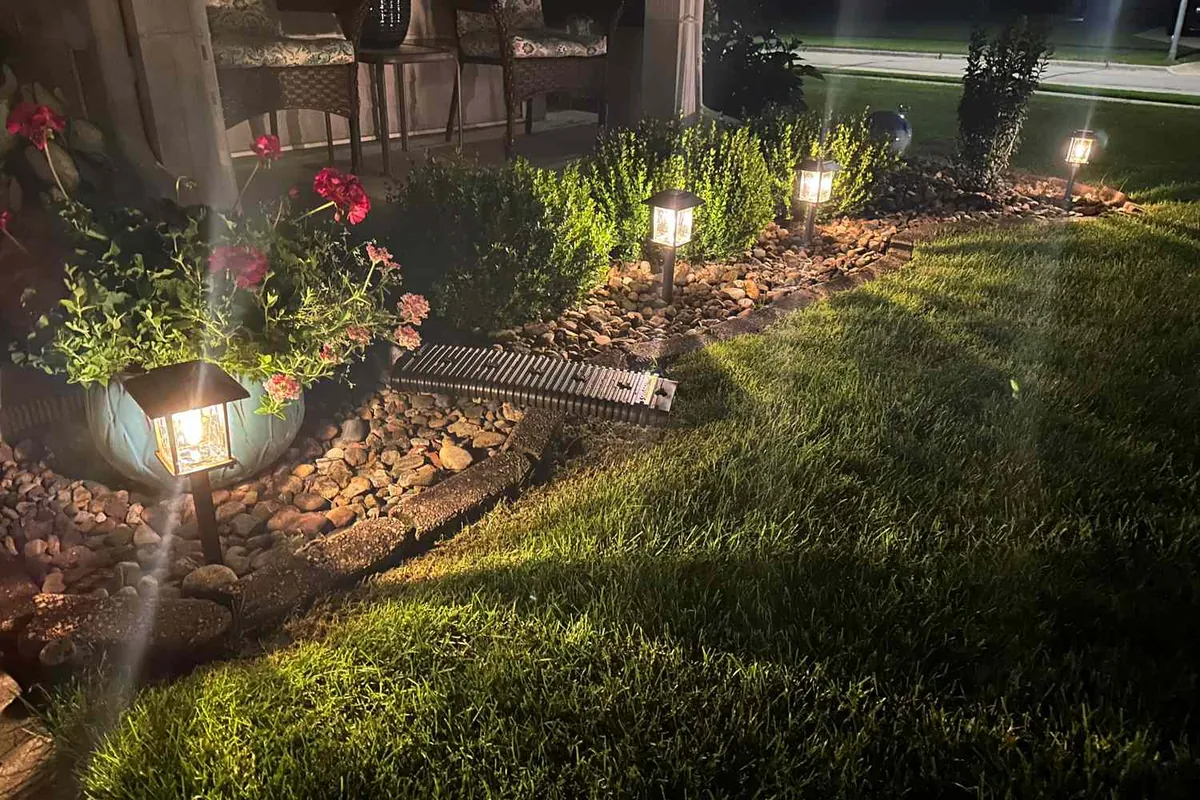
Solar lights need light at the panel, not necessarily at the lamp. That distinction makes some shady locations workable. A fixture can illuminate a dark path under a tree while a separate panel sits several meters away in sun. What does not work is expecting a small integrated panel under dense cover to produce the same runtime as one in an open garden.
Measure shade at the panel location
Visit the site at several times of day and consider seasonal changes. Deciduous trees may shade a path in summer but open it in winter; evergreen screens create year-round shade. Buildings and fences cast longer shadows when the sun is low. A bright-looking location can still receive little direct energy if the sky view is narrow.
Use a separate adjustable panel
String lights, spotlights and some wall lights place the panel on a cable. This allows the fixture to serve a shaded feature while the panel faces a sunnier area. Confirm cable length before purchase and route it without trip hazards, tight bends or low connectors that sit in water. Do not extend a cable unless the manufacturer supports it.
Reduce the nightly energy demand
Lower lumen output, shorter programmed hours and motion activation all reduce the amount of stored energy required. A decorative marker may work acceptably with diffuse daylight where a high-output all-night spotlight will not. Match the mode to the purpose instead of selecting the brightest product and hoping the panel can keep up.
Keep the panel clear
Leaves, pollen and algae accumulate faster beneath vegetation. Clean the panel gently and trim only the foliage appropriate for the garden. Position it where falling leaves will not repeatedly cover the cell. Avoid placing the panel directly under irrigation that creates mineral deposits.
Understand “charges in cloudy weather”
A photovoltaic panel can generate under diffuse daylight, but the amount is lower than in strong direct sun. The useful question is not whether it charges at all; it is whether it collects enough energy for the desired lumen output and runtime. Look for a complete panel-battery-LED specification and test the exact site.
Good product formats for shaded applications
- Spotlights with remote panels: place the lamp at the tree and the panel beyond the canopy.
- Solar string lights: decorate a shaded pergola while mounting the panel at the roof edge.
- Motion wall lights: save energy by using high output only when movement is detected.
- Low-output path markers: use moderate brightness where the purpose is guidance rather than full illumination.
When solar is not the right choice
A courtyard with almost no sky view, a north-facing covered passage or a safety-critical route may need wired low-voltage lighting or a panel installed remotely in a genuinely sunny position. Solar is a design constraint, not a magic source. Recognizing a poor site prevents disappointment and warranty claims.
Run a simple location test before scaling up
Place one representative light or panel in the intended charging position for several days and record when it switches on and off. Repeat during a cloudy period if the application matters year-round. Do not test a shaded site by charging the product somewhere sunny and moving it only for the night; that proves the lamp works, not that the proposed location can support it.
Set expectations on the product page
Retail content should distinguish “works under diffuse daylight” from “delivers full rated runtime in shade.” Show the panel location in installation diagrams and explain that foliage and seasonal shadows affect charging. Clear guidance attracts the right buyer and prevents a strong product from receiving poor reviews because it was installed where no small solar system could succeed.
Guidance for project and wholesale buyers
Ask for cable length, panel dimensions, battery capacity, lumen output and mode logic. For projects, test a sample at the site through representative weather. For retail, show the panel separately in product photography and state that it requires daylight. Browse solar spotlights and solar string lights for formats with flexible panel placement.
Related solar lighting guides
Ready to source solar garden lights?
Send us your target assortment, quantities or OEM brief—our export team will reply with relevant models, specifications and quotation details.
Request a Wholesale Quote Browse Products